


Planting Advice for Beginners
and Tips on Low Maintenance Gardening
When you first start selecting plants for your garden, I recommend choosing some safe bets that are gueranteed to bring you and the wildlife pleasure, before you venture into the world of more adventurous choices. The first step to choosing a plant that will do well and look great, is to match the plant to the environment.
The same is true for low-maintenance gardening. There is no such thing as a zero maintenance garden, but you can make your life much easier with good plant choices.
Matching Plants to the Environment
1. Is the location that you want to plant up sunny or shaded?
If it gets the sun all day or all afternoon then it is classified as 'full sun'. If the area gets sun in the morning only or it is under a tree that lets light though it is 'partial shade' or 'dappled shade'. If it is under a tree with a dense canopy or shaded all day by a wall or similar then it is classified as 'full shade'.
2. Is your soil a clay, a loam (between clay and sand) or a sandy soil?
If you are unsure, check out my blog on clay soils for a simple test you can do.
3. Is your soil freely draining, well-drained, impeded drainage or poorly draining (i.e. it gets waterlogged)?
If you are unsure, check out my blog on clay soils for another simple, free test.
Once you have identified the characteristics of the area that you want to plant up, nurseries will detail which environments each plant is suited to and you can find this information on the plant pages here. I have also tested the plants that I sell in our local soil. Don't be tempted to ignore this information, especially when you are starting out. A plant in the wrong position and soil is unlikely to thrive.
My second tip, to increase your chances of success, is to put new hardy plants in the ground in autumn. This way their roots have the ideal conditions, and plenty of time, to establish before the plant's energy goes into flowering and before the droughts begin in spring and summer. This way you won't need to spend time watering in your new plants and by spring they will be more resilient and often larger with less need for staking. This doesn't mean you should wait until autumn if you have bought new plants in spring or summer; it is always best to plant out straight away. Most importantly, avoid planting out during a drought or heatwave, or when there are frosts overnight, which means that April/May is also a great time for planting, especially if you are growing half-hardy and tender plants (that won't survive a frost) and need to wait until the risk of frost has passed.
When you take a plant out of its pot ready to place it in the ground, it is vital that you tease out the roots (digging into the root ball with your fingers if necessary) and plant in a hole the same depth as the pot. Compost is not generally needed for ornamental plants in our moderately fertile soil (with the exception of certain bedding plants) and is a bad idea for those wildflowers that thrive on poor soils. The pages describing each individual variety on my website explain the requirements for each plant, including whether adding compost will be beneficial or harmful, if applicable. For more information about our local soil, check out my blog on clay soils.
For more tips on making gardening easier, check out my blogs on creating a wildlife-friendly lawn (= a low maintenance lawn) and water-wise gardening (= less time spent watering),
Next up are my recommendations for plants that are easy to grow, in a range of environments, and don't have particular issues with pests and diseases. Click on each one to check that their size at maturity matches the gap you want to fill, and to see their flowering season. I recommend choosing a mix of plants that flower in early spring, spring/summer, and late summer/autumn.
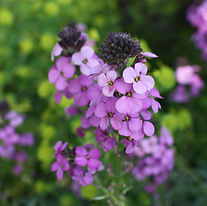
Erysimum 'Bowles Mauve' is an evergreen (keeps its leaves all year) perennial (flowers for many years) that flowers from spring to autumn, is hardy (survives over winter), and loved by pollinators.
It is a small shrub that thrives in our clayey soil and in either full sun or partial / dappled shade, without any special care.

Oriental poppies come in a range of colours and are perennial (flowers for many years), hardy (survives over winter), and the huge flowers are loved by bumble bees.
They form a clump and thrive in full sun and our clayey soil, without any special care.

In addition to being great for cooking, Rosemary is very easy to grow and its flowers are a valuable nectar source in early spring. It is a perennial (flowers for many years), and hardy (survives over winter).
A medium shrub (prune to the size you want) that thrives in our clayey soil in full sun without any special care.

Flowering currant is a perennial (flowers for many years) that is hardy (survives over winter), and puts on a gorgeous display in early spring.
It is a medium shrub that thrives in our clayey soil and in either full sun or partial/dappled shade without any special care.

Salvia 'Hot Lips' is a perennial (flowers for many years) that flowers into autumn, and is hardy (survives over winter).
It is a small shrub that thrives in our clayey soil and in either full sun without any special care.

Ox-eye daisy is a native wildflower and perennial (flowers for many years) that is hardy (survives over winter).
It produces new stems every year and thrives in our clayey soil and in either full sun or partial/dappled shade without any special care.

Rose campion is a short-lived perennial (flowers for two-four years) that is and is hardy (survives over winter).
It thrives in our clayey soil and in full sun without any special care.

Aster x frikartii 'Mönch' is a perennial (flowers for many years) that produces large numbers of flowers in autumn, is hardy (survives over winter), and is loved by pollinators.
It thrives in our clayey soil and in full sun without any special care.

Malva 'Zebrina' is a short-lived perennial (flowers for two-four years) that gently self-seeds, is hardy (survives over winter), and is loved by pollinators.
It thrives in our clayey soil and in full sun without any special care.

Feverfew is a short-lived perennial (flowers for two-four years) that genty self-seeds and is hardy (survives over winter).
It thrives in our clayey soil and in either full sun or partial shade without any special care.

Nasturtiums are so easy to grow, they are my top recommendation for young gardeners. Their abundant flowers and edible leaves make them a great choice for any garden or pot.
A spreading/trailing or bushy plant that thrives in our clayey soil (don't add any extra nutrients) and in either full sun or partial / dappled shade without any special care.

Sweet alyssum is another good choice for young gardeners and the flowers smell of honey.
It is a small plant that thrives in our clayey soil and in full sun without any special care.

Bleeding Heart is a perennial (flowers for many years) that is hardy (survives over winter).
It thrives in our clayey soil and in partial / dappled shade, without any special care. It dies back completely over autumn and winter so mark the spot where you planted it.

Perennial toadflaxes flower from early spring to late autumn, gently self-seed, are hardy (survive over winter), and are loved by pollinators.
They thrive in our clayey soil and in full sun, without any special care.

Geranium maderense is both spectacular and easy to grow. It has exotic, evergreen leaves and produces a bouquet of flowers. It is hardy (survives over winter unless it drops below -10°C), and is loved by pollinators.
It thrives in our clayey soil and in either full sun or partial / dappled shade or full shade, without any special care.

Pittosporums are evergreen shrubs with very attractive leaves. They live for many years and are hardy (survive over winter).
These medium shrubs thrive in our clayey soil and in either full sun or partial/dappled shade without any special care.

Unlike sweet peas, everlasting peas come back year after year (they are perennial) and hardy (survives over winter).
This climber thrives in our clayey soil and in either full sun or partial / dappled shade without any special care.

Daylillies are exceptionally tough perennials (flower for many years) that can withstand both waterlogging and droughts, and are hardy (survive over winter).
They form a clump that can be divided after a few years. They thrive in full sun and our clayey soil, without any special care.

Hedgerow cranesbill is a native wildflower (and I sell two garden varieties) that is perennial (flowers for many years) with several flushes of flowers from spring to autumn, and is hardy (survives over winter).
It makes great ground cover (good for growing under shrubs and at the front of borders) and thrives in our clayey soil and in either full sun or partial / dappled shade, without any special care.

The common cowslip is a native wildflower, perennial (flowers for many years), and hardy (survives over winter).
It will naturalise (gently spread) if planted in a lawn and thrives in our clayey soil and in either full sun or partial/dappled shade without any special care.

WIllow-leaved loosestrife is a perennial (flowers for many years) that is hardy (survives over winter).
It forms a clump of handsome leaves and thrives in our clayey soil, including damp soils, and in full sun without any special care.

Penstemons are perennials (flower for many years) that flower into autumn, and the varieties that I sell are hardy (survive over winter).
It is a small shrub that thrives in our clayey soil and in either full sun or partial/dappled shade without any special care.

Chives are a native wildflower and great for cooking. They are perennial (flower for many years) and hardy (survive over winter).
They form a clump and thrive in our clayey soil and in either full sun or partial / dappled shade without any special care.

Showy sunflowers are perennial (flower for many years), they flower into autumn and are hardy (survive over winter).
They thrive in our clayey soil and in full sun without any special care.

The Crimson flag iris isn't always crimson but it is perennial (flowers for many years) and hardy (survives over winter).
It forms a clump and thrives in our clayey soil and in full sun without any special care.

The foxglove is a native wildflower and I grow a few garden varieties too. It is a perennial (flowers for many years) that is hardy (survives over winter), and is loved by bees.
It produces tall spikes of flowers and thrives in our clayey soil and in either full sun or a mix of sun and shade without any special care.

Verbena bonariensis is a pollinator magnet and a perennial (flowers for many years) that is hardy (survives over winter).
It thrives in our clayey soil and in full sun without any special care.

Sweet williams are a classic garden plant. They are a short-lived perennial (flowers for two-four years) that is hardy (survives over winter), and loved by pollinators.
They thrive in our clayey soil and in full sun, without any special care.

Silver ragwort is grown for its silver leaves that provide a great contrast to other plants and look good all winter.
It form a small bush and thrives in our clayey soil and in either full sun or partial / dappled shade without any special care. It lives for many years but you may want to replace plants if they get straggly.
.jpg)
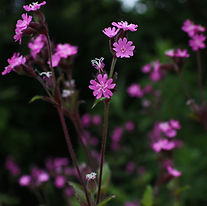
Red campion is a native wildflower and short-lived perennial (flowers for two-four years) that is hardy (survives over winter).
It thrives in our clayey soil and in partial/dappled shade without any special care.

Garlic chives are perennials (flower for many years) that are hardy (survives over winter), and are loved by pollinators.
They form a clump and thrive in our clayey soil and in full sun without any special care.

Dotted loosestrife is a perennial (flowers for many years) that is hardy (survives over winter).
It thrives in our clayey soil and in either full sun or partial/dappled shade without any special care.
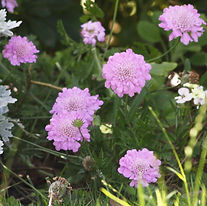
Scabious are famously popular with butterflies and this one, Scabiosa incisa 'Kudo', thrives in our local clayey soil. It is a perennial (flowers for many years) and hardy (survives over winter).
It does well in either full sun or partial / dappled shade, without any special care.

Horned pansies flower all year round, just pausing during cold snaps and heatwaves.
They are best panted in pots or basket in partial or dappled shade without any special care.

Trailing bellflower is a perennial (flowers for many years) that will grow in paving, walls or beds, and is hardy (survives over winter).
It thrives in our clayey soil and either full sun or partial/dappled shade without any special care.
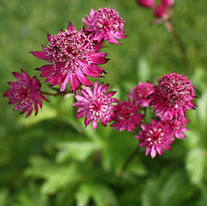
Masterworts are a perennial (flowers for many years) that do well in clay soils and partial shade. They are hardy (survives over winter) and they don't require any special care.

Twinspur 'Dark Eyes' is a perennial (flowers for many years) and hardy (survives over winter).
It is a low-growing that thrives in our clayey soil and in full sun, without any special care.

Geranium palmatum is a perennial (flowers for many years) and hardy (survives over winter).
It is evergreen and thrives in our clayey soil and in full sun, without any special care.
All of the above plants are well-suited to the typical soils (loamy and clayey with impeded drainage) that we have here in Horfield, Lockleaze, Filton and Bishopston. If, however, you have a particularly damp or waterlogged area, with poor drainage, then I have a selection of bog garden plants that are easy to grow in a damp environment. Creating a bog garden is also a great way to support wildlife in your garden!