


Wildlife Havens
Wildlife need water, food, and shelter (in a pesticide-free environment), and this blog is all about ensuring your garden wildlife have somewhere to take refuge and shelter. Below, I provide some tips on creating rotting log / rock piles, open compost heaps, a hibernaculum, and planting a hedge, but the simplest thing you can do is to avoid tidying up in autumn. Lots of plants lose their leaves and die back in autumn and winter, and it is tempting to clear the dead material away but many invertebrates hibernate in this debris. I recommend doing a minimal tidy up of your beds, raking/mowing the leaves off your lawn and putting piles of them around your perennial plants and under hedges (this isn't a leaf mulch / mould), then waiting until spring to prune back dead material. Some plants (e.g. hydrangea and climbing roses) will withstand frosts better if they haven't been pruned in autumn so these plants will be happier too.


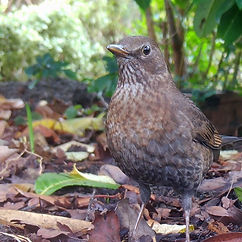
When you do prune larger shrubs and trees, the smaller twiggy material is a good addition to your compost whereas the larger branches are ideal for a rotting log pile. You can place a pile of logs anywhere in your garden. We have one under a pair of large, dense shrubs in a flowerbed, one next to our pond and one by our hedge. Over time the logs will rot down and the pile will shrink so you can keep adding more every year. We also have a pile of rocks by the pond and a few around our bog garden bed. Piles of logs and/or rocks are brilliant for a huge range of invertebrates and amphibians (frogs, newts and toads). Robins, blackbirds and hedgehogs love rootling around in ours.


An open compost heap is a great environment for many animals. It is warmer and has a different range of nutrients to a rotting log pile so having both will expand the range of wildlife havens you have to offer. In addition to supporting a wide range of invertebrates, including worms, an open compost heap provides a home for slow worms, which are a type of legless lizard and not worms at all. Like our rotting log piles, our open compost heap is a favourite foraging ground for birds, hedgehogs and, also, badgers.
Compost heaps should be made up of fruit and vegetable peelings, green garden waste (e.g. lawn clippings) and brown garden waste (e.g. pruned wood) or cardboard. Getting it right is a whole blog of its own and there is some good advice from the Royal Horticultural Society. When it comes to turning your mix, a compromise is needed between getting the best compost for use in your garden and providing a wildlife haven. Turning an open compost heap ensures it doesn't become compacted and air gets mixed in (good for the compost and for wildlife), and allows you to check moisture levels. The risk is that it disturbs and possibly harms the wildlife living their, particularly larger animals such as slow worms or hedgehogs. Always proceed with caution when you are turning a compost heap. You can also avoid turning the compost in winter to reduce the risk to wildlife. We have never encountered a hibernating hedgehog in our own open compost heap. Our wildlife cameras do regularly capture hedgehogs foraging there but they never stay. I suspect it is too wet to make it a good location for hibernation.

A hibernaculum is a place where an animal hibernates over winter. To provide materials and locations that hedgehogs might choose for hibernation, we have piles of autumn leaves and twigs under trees and shrubs, log piles (see above), a basic brick shelter under a heap of leaves, and we have bricked around the space under our shed, leaving two 13cm gaps for hedgehogs to get in and to allow air flow. I am a little wary of shop-bought hedgehog houses because they don't all provide enough insulation for hibernation, they still need to be sited in the right location with the right matierals, and hedgehogs are pretty good at seeking out a good spot for hibernation themselves. Hedgehogs roam about 2km a night so they have a decent area to choose from if we leave our gardens a little wild.


I have also built a hibernaculum for reptiles and amphibians. Frogs, toads and newts are known as pond animals but the adults spend most of their time on land, eating slugs, worms and insects, and sheltering under stones, logs, pots, mud and debris. To build a hibernaculum for our local reptiles and amphibians, first, I asked our neighbours for any off-cuts they had of drain pipes and similar. Then I dug a pit about 1m deep with shallow, sloping sides. Next, I laid the pipes so they were running down the slope from just above the surface of the pit to the bottom. I then placed chopped branches in the bottom of the pit, followed by homemade compost and, finally, back-filled the hole with the soil I had dug out, leaving the pipe entry holes clear. A few year later I starting adding more pruned branches and autumns leaves on top. I don't know if this hibernaculum has been a success - our wildlife cameras don't detect cold-blooded animals so I haven't monitored the area - but I do know that we have a large number of frogs all over the garden, in the greenhouse, in the flowerbeds, under pots and in our garage.


One of the best wildlife havens you can provide in a garden is a hedge. By planting a hedge, you are providing shelter and nesting sites. If you plant native species then you are also providing food plants for a range of wild animals. Native plant species used in hedges are typically tree species that can handle being pruned into a hedge. The species that I have found work well in our local soil include the wayfaring tree (Vibernum lantana), guelder rose (Vibernum opulus), spindle (Euonymus europaens), and hornbeam (Carpinus betulus). These species are food plants for a variety of caterpillars and native hedges are a great way to support butterfly and moth populations. We have seen plenty of caterpillars in our own hedge, as well as beetle larvae, and none have caused any problems for the plants. Having a mixed species hedge, rather than using a single plant species, reduces the chances of larvae reaching the kind of numbers that could overwhelm the plants. Sadly, the exception is box, which is a native species that is great for hedges but I can no longer grow it here due to the huge numbers of box moth caterpillars that build up.


Hawthorn and blackthorn are also native species commonly used in hedges in the countryside. They are spiky and a little scruffy, but the hawthorn is a wildlife champion supporting over a hundred other species including ten moth caterpillars, dormice (I wish!) and a wide range of birds that feed on the fruit. In our own garden we have a hawthorn tree (or may tree), rather than a hedge, and it is the garden birds' favourite place to rest when they aren't feeding. I have also snuck a few blackthorn along our boundary between two large shrubs, so we can have sloe gin.
The native hedge species above are wildlife champions that are also deciduous (lose their leaves in autumn) and not overly neat. If you are looking for an evergreen hedge and/or a more neatly clipped look then there are plenty of options.
Wild privet (Ligustrum vulgare) is a native plant that is semi-evergreen and can be used in a hedge, and its non-native relative, garden privet (Ligustrum ovalifolium), is evergreen and a classic hedge plant forming a neat, dense bush. Both are food plants for privet hawk-moth caterpillars and we have seen the adult moths in our Horfield garden.
Yew (Taxus baccata) is also a native species that makes an excellent evergreen hedge, which can be trimmed into the shape of your choice. It provides shelter for nesting birds, its berries are food for birds and small mammals, and it is a food plant for caterpillars of the satin beauty moth. It does come with the caveats that it is slow growing (although also very long-living) and it is particularly poisonous to humans.
Wilson's honeysuckle, Lonicera nitida, comes from China and is very different from the native British honeysuckle. It is an ideal hedge plant; evergreen with small leaves and a dense growth habit, which means it can be trimmed into the classic garden hedge shape. It is also the birds's favourite place to nest in our garden. Running the length of the back of our garden, it provides a popular corridor for visiting foxes and hedgehogs.


The common barberry (Berberis vulgaris) is a native plant (or, at least, has been growing naturally here for thousands of years), is a food plant for twenty caterpillar species, has small prickly leaves and an abundance of flowers, and is deciduous (loses its leaves in winter). Its relatives Darwin's barberry (Berberis darwinii) from South America and the hybrid the golden barberry (Berberis x stenophylla) are evergreen with small leaves and an abundance of flowers. We grow both in our mixed hedge and one of our lovely neighbours has an entire hedge of of Darwin's barberry. There are also barberry varieties with different leaf colours. Pruning shrubs or trees into a hedge can often mean they don't get the opportunity to flower but these barberrys (and spindle, above) will flower abundantly even when trimmed twice a year, and are popular with pollinators.


For faster growing, tall, evergreen hedge plants, which do well in our soils, I can recommend oleaster (Eleagnus x ebbingei and Eleagnus x submacrophylla), Portuguese laurel (Prunus lusitanica), and cherry laurel (Prunus laurocerasus). We grow them in a tall, mixed species, evergreen hedge close to our house to give us and our neighbours some privacy. The leaves are large, glossy and a variety of greens, which makes for a handsome-looking hedge. None of these species are British natives and they aren't food plants for our local wildlife, but they do provide shelter. Frogs and hedgehogs can be found hiding under this hedge and blue tits like to peck the invertebrates sheltering amongst the leaves.


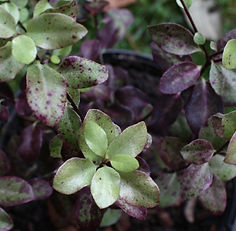
Tawhiwhi (Pittosporum tenuifolium) from New Zealand can also form taller, evergreen hedges. The leaves are much smaller than those of the oleasters and laurels listed above, and they have a very attractive sheen. There are a range of cultivars that come with different coloured leaves and variegation. They aren't food plants for the native wildlife but they do provide all important shelter and their tiny flowers release nectar in the evening for nocturnal pollinators.



The final, important type of shelter for garden wildlife is trees. Some of these overlap with the hedge plants list above but there are so many more trees that are true wildlife champions offering shelter, cover, places to nest, and food that they merit a whole blog of their own. The Royal Horticultural Society provide a great list of native tree species that are well-suited to gardens. Make sure you choose one that is fine with clayey soils and that is suited to the position you are going to plant it in. You can look up any native trees you are interested in on the Woodland Trust's website to find out more about their value to wildlife.


